Is EMS Training Safe? What the Research Says
A deep dive into EMS training safety — FDA-cleared devices, clinical studies, contraindications, and how to train with confidence.
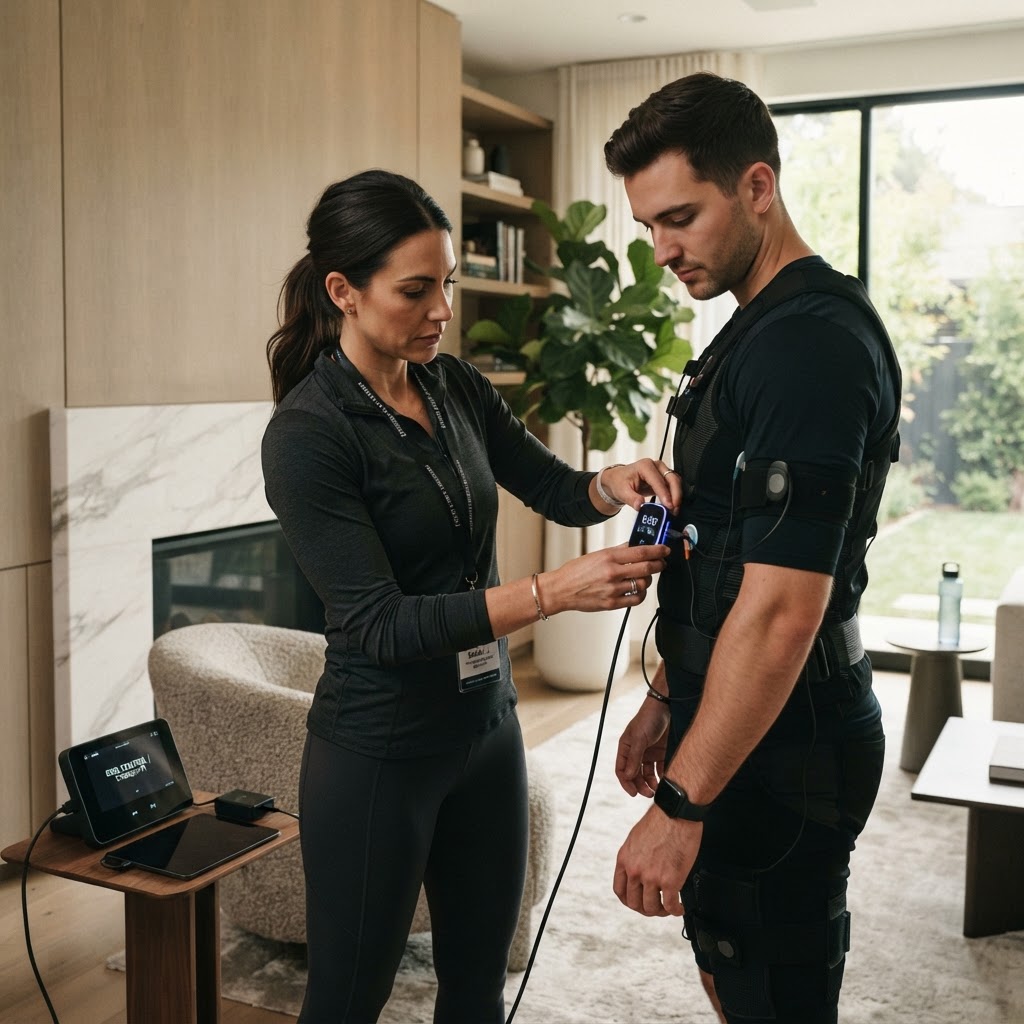
Safety is the most important question to ask before starting any new fitness modality — and it's especially important with EMS, since it involves electrical stimulation. The good news is that EMS training has been extensively studied, is FDA-regulated, and has a strong safety record when performed with proper equipment and certified professionals. Here's what the science says.
The Short Answer
Yes, EMS training is safe for the vast majority of healthy adults when performed with FDA-cleared equipment and guided by a certified trainer. Decades of clinical research support its use in fitness, rehabilitation, and physical therapy settings. However, like any intense exercise modality, it's not appropriate for everyone — and certain medical conditions require medical clearance or contraindicate EMS entirely.
FDA Regulation and Device Safety
EMS devices used for fitness are regulated by the FDA as Class II medical devices. This means they must meet rigorous safety and efficacy standards before reaching the market. FDA clearance requires:
- Electrical safety testing — ensuring the device cannot deliver harmful levels of current
- Clinical efficacy evidence — demonstrating the device produces its intended effects
- Manufacturing quality standards — consistent, reliable production
- Clear usage guidelines — approved protocols for safe operation
At EMS-ology, we use only FDA-cleared EMS equipment and follow manufacturer-approved protocols. Every session is conducted by a certified EMS specialist trained in safe operation.
What the Clinical Research Shows
Decades of Use in Medicine
EMS technology has been used in physical therapy and rehabilitation for over 50 years. It's a standard tool for:
- Preventing muscle atrophy in immobilized patients
- Rehabilitation after surgery or injury
- Treating muscle imbalances and weakness
- Neurological rehabilitation
The fact that medical professionals use EMS therapeutically is strong evidence of its safety when properly applied.
Fitness-Specific Studies
Multiple peer-reviewed studies have examined the safety of whole-body EMS for fitness:
- A 2018 study in Frontiers in Physiology found EMS training was well-tolerated with no adverse events across an 8-week program
- A 2023 study reported that daily EMS combined with resistance training produced significant body composition improvements with no safety concerns
- A comprehensive review noted that EMS is safe for healthy adults when intensity is properly managed and sessions are spaced appropriately
The Importance of Rest Between Sessions
Research consistently shows that the key to EMS safety is adequate recovery between sessions. Most experts recommend at least 48 hours between EMS sessions. This allows muscles to recover from the intense stimulation and prevents overuse. Training too frequently — especially daily — is the most common safety mistake with EMS.
Who EMS Is Safe For
EMS is generally safe for:
- Healthy adults of all fitness levels
- Beginners who have never exercised regularly
- Athletes looking to enhance performance
- Seniors working to maintain muscle mass
- Postpartum women (with medical clearance)
- People recovering from certain injuries (with medical clearance)
- Busy professionals seeking time-efficient workouts
Who Should Not Do EMS Training
There are specific contraindications where EMS should be avoided or requires medical clearance. The main categories are:
- Pregnancy — EMS is not recommended during pregnancy
- Heart conditions — pacemakers, recent heart attacks, severe arrhythmias
- Epilepsy — electrical stimulation may trigger seizures
- Active cancer/tumors — in the area of electrode placement
- Acute infections or fever — wait until recovered
- Thrombosis/embolism — active blood clots
- Recent surgery — without medical clearance
- Certain neurological conditions — consult your physician
If you have any medical condition, always consult your doctor before starting EMS training.
How EMS-ology Ensures Your Safety
Pre-Session Health Screening
Every new client completes a health questionnaire before their first session. This identifies any conditions that require medical clearance or contraindicate EMS. We will never proceed with a session if there's a safety concern.
Certified Professional Guidance
Every session is conducted by Anna, a certified EMS specialist with extensive training in safe EMS operation. She monitors your form, comfort, and intensity throughout every session.
FDA-Cleared Equipment
We use only professional-grade, FDA-cleared EMS devices that are regularly maintained and calibrated. The equipment is designed with multiple safety features, including automatic intensity limits and emergency shutoff.
Sterilization Protocols
All equipment is thoroughly sanitized between every client using medical-grade disinfectants, UV-C sterilization, and single-use barriers. Your health and safety extend beyond the workout itself.
Personalized Intensity
Your trainer adjusts the intensity to your fitness level, comfort, and goals. You're never pushed beyond what's safe and appropriate for your body.
The Bottom Line
EMS training is a safe, well-researched fitness modality with decades of clinical backing. The keys to safety are simple: use FDA-cleared equipment, train with a certified professional, respect recovery time between sessions, and get medical clearance if you have any health conditions. When these guidelines are followed — as they are at every EMS-ology session — EMS is a safe, effective, and efficient way to transform your body.
Next Article
Who Should Not Do EMS Training? Contraindications Explained
EMS training is safe for most people, but not everyone. Here's who should avoid EMS or get medical clearance first.
Continue ReadingReady to experience EMS training or lymphatic wellness for yourself?