EMS Training for Beginners: What to Expect at Your First Session
New to EMS training? Here's everything that happens at your first session — from suit fitting to the workout itself.
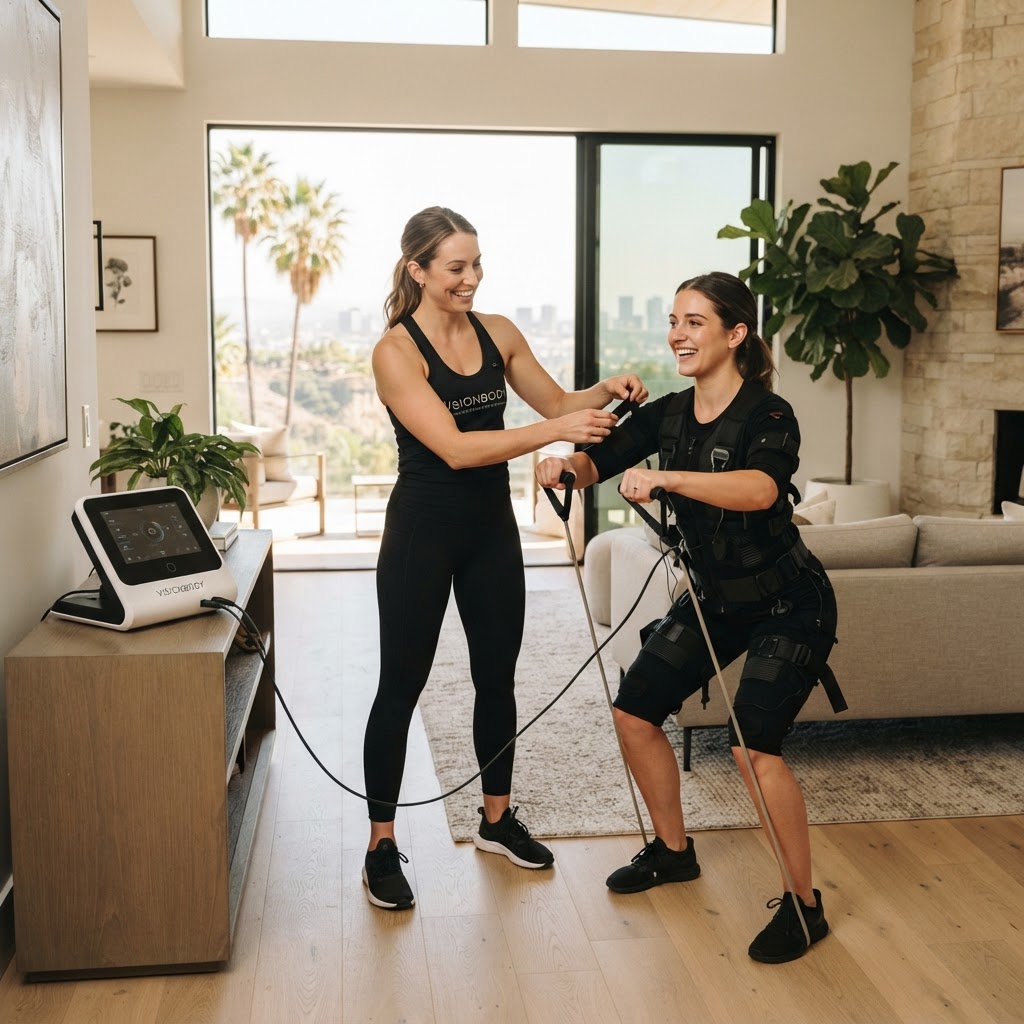
Starting anything new can feel intimidating — especially when it involves a futuristic-looking suit and electrical impulses. If you've been curious about EMS training but haven't known what to expect, this guide is for you. Here's exactly what happens at your first EMS session, from the moment your trainer arrives to the way you'll feel afterward.
Before Your First Session
The Health Screening
Before anything else, you'll complete a brief health questionnaire. This is standard for any reputable EMS provider and is essential for your safety. The questionnaire asks about:
- Medical conditions and medications
- Recent surgeries or injuries
- Pregnancy (EMS is contraindicated during pregnancy)
- Heart conditions and implants
- Any concerns or questions you have
Be honest and thorough — this information ensures your session is safe and appropriate for you.
What to Wear
You'll wear the EMS suit directly against your skin, so:
- Wear minimal, comfortable clothing — you'll be putting the suit on over a thin base layer
- Avoid lotions or oils — they can interfere with the electrode contact
- Have a small clear space — you need room to move, but not much (a living room or bedroom is plenty)
- Hydrate — drink water before your session; hydrated muscles respond better to EMS
Step 1: The Consultation (5-10 Minutes)
Getting to Know You
Your trainer will sit down with you to discuss:
- Your fitness goals — weight loss, strength, toning, recovery, general fitness
- Your experience level — whether you're a complete beginner or have fitness background
- Any injuries or limitations — areas to avoid or modify
- What to expect — a walkthrough of the session so there are no surprises
This is your time to ask questions. No question is too basic — your trainer wants you to feel completely comfortable.
Setting Your Intensity Level
Your trainer will explain how the intensity works and reassure you that you're always in control. The golden rule of your first session: start conservative. It's better to finish your first session thinking "that was easier than I expected" than to be overwhelmed. You can always increase intensity in future sessions.
Step 2: Suit Fitting (5 Minutes)
Putting on the Suit
The EMS suit looks like a form-fitting vest and shorts (or a full-body suit, depending on the system). Your trainer will:
- Help you into the suit, ensuring proper fit
- Adjust the straps and electrodes for optimal contact
- Connect the suit to the EMS device
- Check that everything is comfortable before starting
The suit should feel snug but not restrictive. The electrodes need firm contact with your skin to work properly.
The Sensation Test
Before the workout begins, your trainer will turn the device on at a very low setting. You'll feel a mild tingling — this is the baseline. Your trainer will ask how it feels and make sure you're comfortable before proceeding.
Step 3: The Workout (15 Minutes)
The Structure
The 20-minute EMS session is structured in phases:
Phase 1: Strength and Toning (8-10 minutes)
Your trainer guides you through a series of exercises:
- Squats and lunges — for legs and glutes
- Arm movements — biceps, triceps, shoulders
- Core work — planks, crunches, or standing core exercises
- Back exercises — for posture and spinal support
During each exercise, the EMS intensifies the contraction. You'll feel your muscles working harder than they ever have — but in a controlled, manageable way.
Phase 2: Endurance or Cardio (3-5 minutes)
The EMS switches to a higher frequency that targets endurance. You'll do more dynamic, continuous movements:
- Mountain climbers
- High knees
- Boxing movements
- Dynamic squats
This phase elevates your heart rate and challenges your cardiovascular system.
Phase 3: Recovery and Massage (2-3 minutes)
The EMS switches to a low-frequency setting that provides a deep, massaging contraction. This helps:
- Flush metabolic waste from your muscles
- Reduce post-workout soreness
- Promote active recovery
- Leave you feeling energized, not depleted
Your Role During the Workout
- Focus on form — your trainer will correct your movements
- Communicate — tell your trainer if the intensity is too high or too low
- Breathe — steady breathing helps you manage the intensity
- Follow instructions — your trainer guides every movement
Step 4: Cool Down and Removal (3-5 Minutes)
Winding Down
After the workout phase, the EMS intensity is reduced to a gentle level. Your trainer guides you through light stretching while the suit provides a soothing massage sensation. This helps your body transition from the intense workout to a relaxed state.
Suit Removal and Cleanup
Your trainer disconnects the suit, and you change back into your clothes. The suit and all equipment are sanitized using medical-grade protocols. You're left with your space exactly as it was.
How You'll Feel After Your First Session
Immediately After
- Energized — most people feel a surge of energy, not exhaustion
- Lighter — the massage phase leaves you feeling loose and relaxed
- Slightly tingly — your muscles may feel "awake" and sensitive
- Accomplished — you just completed a full-body workout in 20 minutes
The Next Day
- Mild soreness — similar to starting any new workout, you may feel DOMS for 1-2 days. This is completely normal and shows your muscles are adapting.
- Good energy — despite the soreness, most people feel energized the day after
- Improved posture — you may notice you're standing taller
After a Few Sessions
- Addicted — this is the most common response. People who were nervous about their first session are often counting the days until their next one.
- Stronger — everyday movements feel easier
- More toned — muscles feel firmer and look slightly more defined
Common First-Session Concerns — Addressed
"I'm not fit enough for EMS"
EMS is scalable to any fitness level. Your first session will be calibrated to your current ability. Many of our most successful clients started as complete beginners.
"I'll be the weakest person who's ever done this"
Every session is private and one-on-one. There's no one to compare yourself to. Your trainer works with you at your level.
"I won't be able to keep up"
The session is only 20 minutes, and your trainer adjusts the intensity throughout. You can always ask to slow down or reduce intensity.
Tips for a Great First Session
- Arrive hydrated — drink water throughout the day before your session
- Eat lightly 1-2 hours before — don't train on a full or empty stomach
- Wear comfortable clothes — you'll be putting the suit on underneath
- Communicate openly — your trainer can only help if you tell them how you feel
- Start conservative — you can always increase intensity later
- Focus on form, not intensity — proper movement is more important than high stimulation
- Enjoy it — most people find EMS genuinely enjoyable once they relax into it
The Bottom Line
Your first EMS session is nothing to be nervous about. It's a guided, personalized, 20-minute experience that's designed to be comfortable, effective, and even enjoyable. By the end of it, you'll have completed a full-body workout, learned how EMS feels, and taken the first step toward a stronger, healthier body. Most people who were nervous before their first session can't wait for their second. That could be you.
Next Article
EMS for Post-Partum Women vs. Conventional Workouts
Why EMS training is a game-changer for new mothers — time efficiency, targeted muscle activation, and faster recovery.
Continue ReadingReady to experience EMS training or lymphatic wellness for yourself?